The Candidates In Print

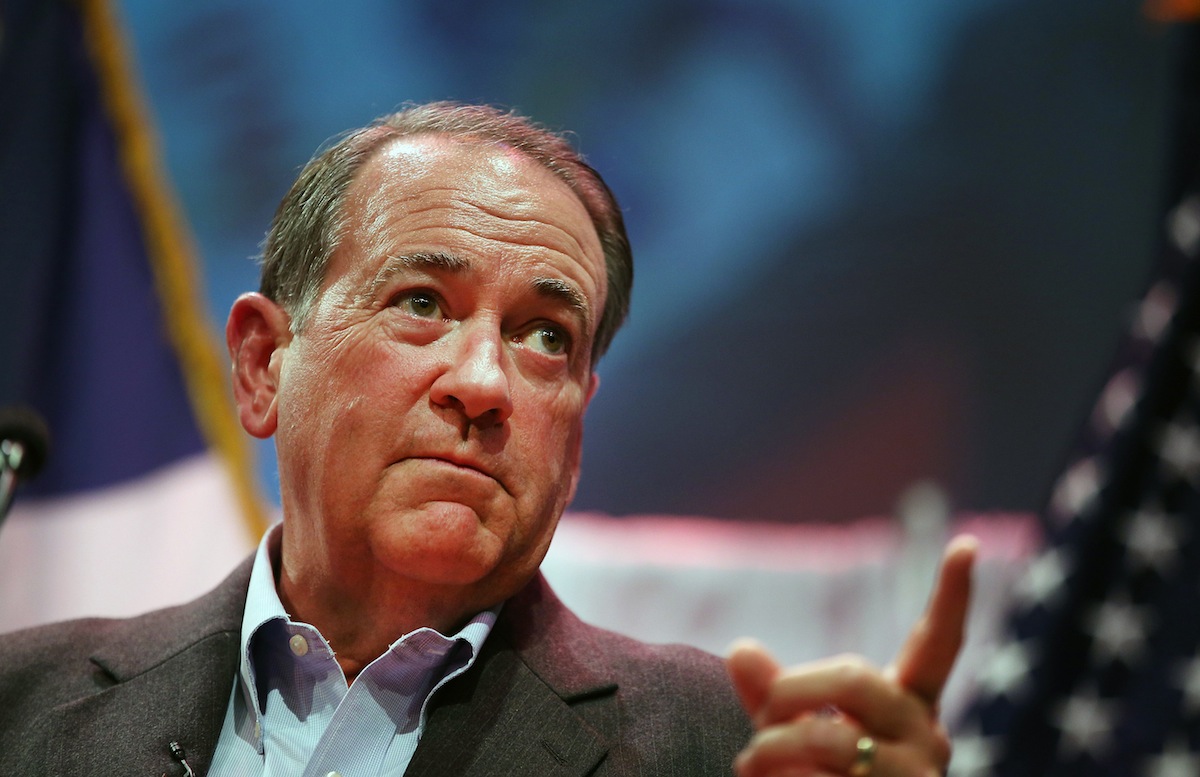
In Character Makes a Difference, the former Arkansas governor Mike Huckabee emphasizes the importance of Christian values in politics today. Drawing on Bible readings and his own experience in this 227-page book, published in 2007, the Presidential candidate gives an often-funny account of his life to date, focusing on his transition from pastoral life to politics and his relationship with his family.  —Laura Fitzpatrick

Character Makes a Difference
by Mike Huckabee
Childhood Huckabee was born in Hope, Arkansas, to a firefighter father and an office clerk mother. After attending the same kindergarten and elementary schools where Bill Clinton had been a student nine years earlier, Huckabee graduated from Ouachita Baptist University in Arkansas. He recalls developing a political sensibility early on: By 17, "I was a true-blue, conservative, family-oriented young Republican." (p. 45, 148)
Marriage Huckabee and Janet McCain met as high school students in Hope, went on to Ouachita Baptist University together, and married at 18. He was initially attracted, he writes, to her sense of adventure and her spiritual strength. In their first year of marriage, Janet was diagnosed with cancer of the spine (from which she recovered fully). Three years after their first child, John Mark, was born, she miscarried. (p. 88)
Fatherhood "I think the best preparation my children could have had for playing the role of 'the governor's kids' was being 'the preacher's kids,'" Huckabee writes, noting that John Mark, 30, David, 26, and Sarah, 24, were thrust into the spotlight early. He and Janet, he writes, have done their best to make their children feel "normal," chaperoning field trips and encouraging involvement in the community. (p. 90-2)
From The Pulpit to Politics Huckabee became increasingly frustrated with the minister's life. His congregation, he felt, was more focused on parish social functions than on their own salvation. "I wasn't bitter or angry; I just wanted my life to count for something more than being an ordained cruise director," he writes.

Although he saw his venture into politics as God's will, many of his fellow believers, he remembers, were appalled. "How can you call yourself a Christian when you don't even realize that you are lowering yourself to a position below your calling?" asked one angry letter. "It's pointless to gripe about how bad the government is and how terrible the laws are if people who have better ideas are not willing to share them and get involved," Huckabee writes. "Christians need to pull on their hip boots and wade into the swamp of social and moral issues." (p. 47-53, 117)
First Offices In 1992, Huckabee challenged Democratic incumbent Dale Bumpers for his Senate seat. Huckabee recalls meeting Bumpers, then the governor, when he was a boy: "[H]e had told me then, 'You know, we need young men like you in politics. I hope you will consider that some day.' (I quoted his words in speeches when I ran against him.)" Huckabee lost the Senate race, but won the lieutenant governorship in a special election in 1993. Although he calls the lieutenant governorship "a position in Arkansas that is about as attractive to career politicians as the spit collector in a boxing ring," he served until 1996. (p. 60-7)
Moving Up The Ladder When Governor Jim Tucker resigned, facing convictions on federal charges of fraud and conspiracy in the first Whitewater trial, Huckabee walked away from a 15-point lead in the 1996 Senate race to become the third Republican governor in Arkansas since Reconstruction. He took office amid controversy, with Governor Tucker waffling on whether or not he would actually resign. Huckabee recalls, "The caterers at the convention center had been keeping vigil, hoping the cakes that said 'Congratulations Governor Huckabee' wouldn't end up an embarrassment. The party started a little late, but the cakes fit right in." (p. 32-3)
Governor Huckabee "The Arkansas state motto, emblazoned on our official seal, is...'The People Rule,'" Huckabee notes. "The boss is not the governor but the citizens he serves." He made a point of demonstrating that attitude to his constituents, he says. "If they came in with tattered clothes and smelled bad and clearly had little power and dignity, the one place where they would be respected was in my office." (p. 41)
On The Role of Faith in Politics "Those who believe God created humans have a different worldview from those who believe humans created God," Huckabee argues, saying that those with faith emphasize selflessness while nonbelievers focus on the individual. "Politics are totally directed by worldview. That's why when people say, 'We ought to separate politics from religion,' I say to separate the two is absolutely impossible." (p. 113)
On The Media "Television is like fire. Fire can be good or it can be bad. It can burn you, but it also can warm you, cook your food, and purify," Huckabee writes. Just because politicians must be good on television to succeed today, "doesn't mean you have to give up your intellect; it means you have to be able to demonstrate that intellect in the medium the public has chosen." (p. 140-2)
On What Democrats Are Missing Democrats who argue that education — about sexuality and in general — is the solution to social ills, Huckabee argues, are misguided. "[O]ur problems do not result from economics or deficiencies in education. They result from the selfish decision to ignore God's standards of integrity. Standards based on anything else are relative, and relative standards are meaningless." He adds that society's acceptance of moral relativism is dangerous. "We are scared to death to say, 'That's wrong.' We want to say, 'You have a disorder or a disability,' or any of the scores of euphemisms people use. Yet all we're doing is struggling to cover up immoral, improper, illegal, or boorish behavior." (p. 100, 112)
On Competition While criticizing Democrats' positions, Huckabee notes that many he knows personally hold their convictions with sincerity. Debate, he argues, is a good thing. "Eliminating competition is not nearly as productive in the long term as besting the competition. A basketball team that never plays a game but advances due to the forfeiture of other teams is not prepared to play its best. A politician who seeks to win an election by destroying the reputation of his opponents will eventually die by the sword" (p. 154-6)
On Running For President "I hear one comment a lot these days: 'Now that you've been governor, I guess you want to be the next guy from Arkansas to go to the White House.'...Wherever you are, there's a temptation to want to jump to the next level. I have come to realize that my next position might be at quite a different level. It may be running a soup kitchen somewhere." He is careful, however, not to rule out the possibility of a bid for the Oval Office. And, he writes, "I freely admit that I love the excitement of campaigning. It's the thrill of the unknown." (p. 169)
SPECIAL
It was Mitt Romney and Rudy Giuliani's big day at the special Sunday morning Republican debate

RELATED ARTICLE
With 20 states eyeing February 5th primaries, the Hawkeye State could be irrelevant. Ana Marie Cox surveys the field to see who plans to run in Iowa, and who'll be running away
FROM THE TIME ARCHIVE